

Many swimming pool owners keep their pool pumps running 24 hours per day, which goes far beyond the pool's filtering needs or the mixing of chemical cleaning products. Limiting it to 3 hours per day should be enough.
That's just an example of how a few conservation measures can reduce swimming pool energy consumption. It’s often possible to reduce energy consumption of swimming pools by 80% or more.
 4,5 Million Residential Swimming Pools Just in the USA
In the USA, the average residential swimming pool consumes about $300-$400 worth of electricity, per year.
Average swimming pools waste too much energy. And it doesn't have to be this way.
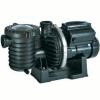 Multi-Speed Pumps Provide Huge Energy Savings
The vast majority of the existing pool pumps are single-speed; they can’t change their flow rate; during most of the time they induce too much water circulation, wasting energy.
Multi-speed pumps are a great alternative to them. They cost a little more, but they worth their price. The alternative is to downsize single-speed systems, by designing pool systems with better filters and shorter and larger diameter pipes.
 Pool Conservation Measures
 It’s often possible to reduce the pool's power consumption by 50% or more without new pool pumps or without the use of solar energy.
How exactly? By reducing the pool’s pump operating time, by using pool covers and wind breaks around the pool (in windy areas), or by considering shorter pipes, larger filters and other conservation measures…
See:
Swimming pool Energy Conservation Measures
 Pool Covers
Pool covers - especially bulb-solar covers - can be a cheap and cost-effective investment, especially in heated swimming pools, in climates with cool nights.
They reduce the pool’s heat loss by a high percentage.
See:
Pool Covers & Energy Savings
 Solar Pool Heaters for Energy Savings
Solar pool heaters are great for those who want to extend their swimming pool season beyond the summer months.
See:
Solar Swimming Pool Heating
Pools Online Resources

Read our book (Print and Kindle ebook versions);
Save thousands of dollars;
Avoid costly mistakes and pitfalls.
House-Energy Video on Pools
Follow us: 


©2013 House-Energy, Help Homeowners reduce energy use and carbon emissions. Ed. Reisinh
